Facing the Silent Church
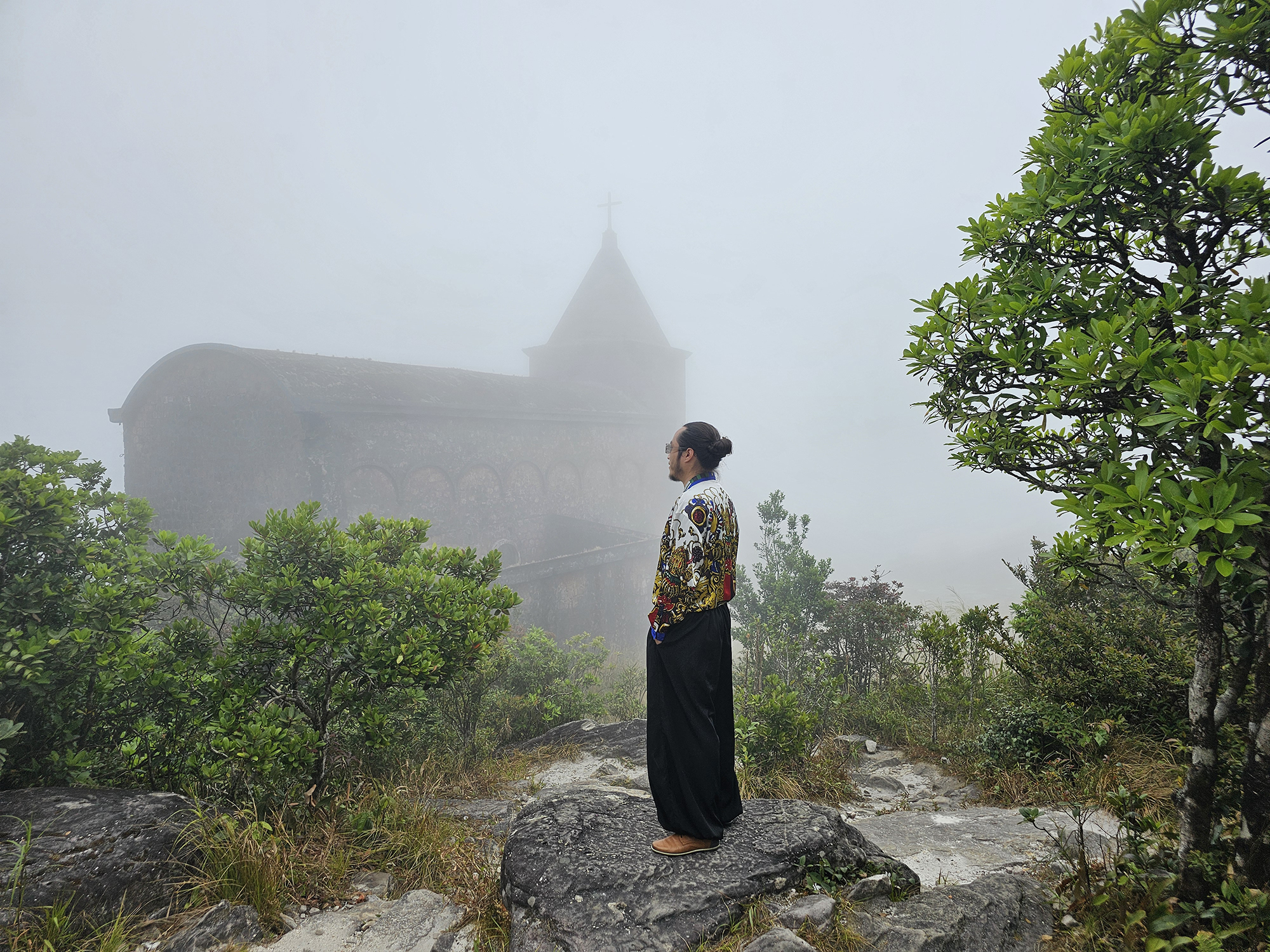
There is no clear moment of “appearance” when Bokor Church comes into view.
The structure does not stand apart from the landscape; it gradually reveals itself through the mist—as if it had never left this place, and it is only we who need time to recognize its presence.
As one moves closer, the stone walls begin to emerge. There is no roof, no doors, none of the elements that would complete a building in the conventional sense. Yet it is precisely in this state of incompleteness that the church carries a particular weight—a presence that does not require formal wholeness to be felt.
The surrounding space is almost entirely silent.
There are no voices, no activity, no signs of a structure “in use.” Only wind, mist, and stone walls shaped by time.
The silence here is not an absence.
It is another form of presence—a presence that compels one to stop.
Standing before Bokor Church, the first response is not to think about what should be done to the building, but to sense what it carries. The cracks, the weathered stone surfaces, the traces left behind—all are not merely signs of deterioration, but layers of information.
Yet these layers cannot be read at a glance. They require time.
The longer one observes, the clearer it becomes that this structure cannot be approached as something to be immediately “assessed.” It does not present itself for easy understanding. On the contrary, it maintains a certain distance—as if asking the visitor to change their way of approaching it.
Here, “encounter” is not only physical. It is a state of being.
A state of remaining still long enough to realize that not all value lies in what remains intact. Some values only emerge after loss—when a structure has endured, and yet still stands.
Bokor Church does not tell its story directly.
There are no information panels, no explanations, no clear sequence. What remains is an open space—where one must ask: what has happened here, and what still remains?
And within this very ambiguity, something becomes clearer.
This is not a place that needs to be made immediately “understandable.” What matters more is to preserve its ability to be read—through multiple layers, in different ways, over time.
Thus, the first encounter with Bokor Church is not a moment of discovery.
It is a moment of realization—that one is standing before a reality more complex than what can be seen.
And from that realization, a natural requirement emerges:
Before thinking about changing the structure, one must learn to remain long enough to understand it.
Bài viết khác
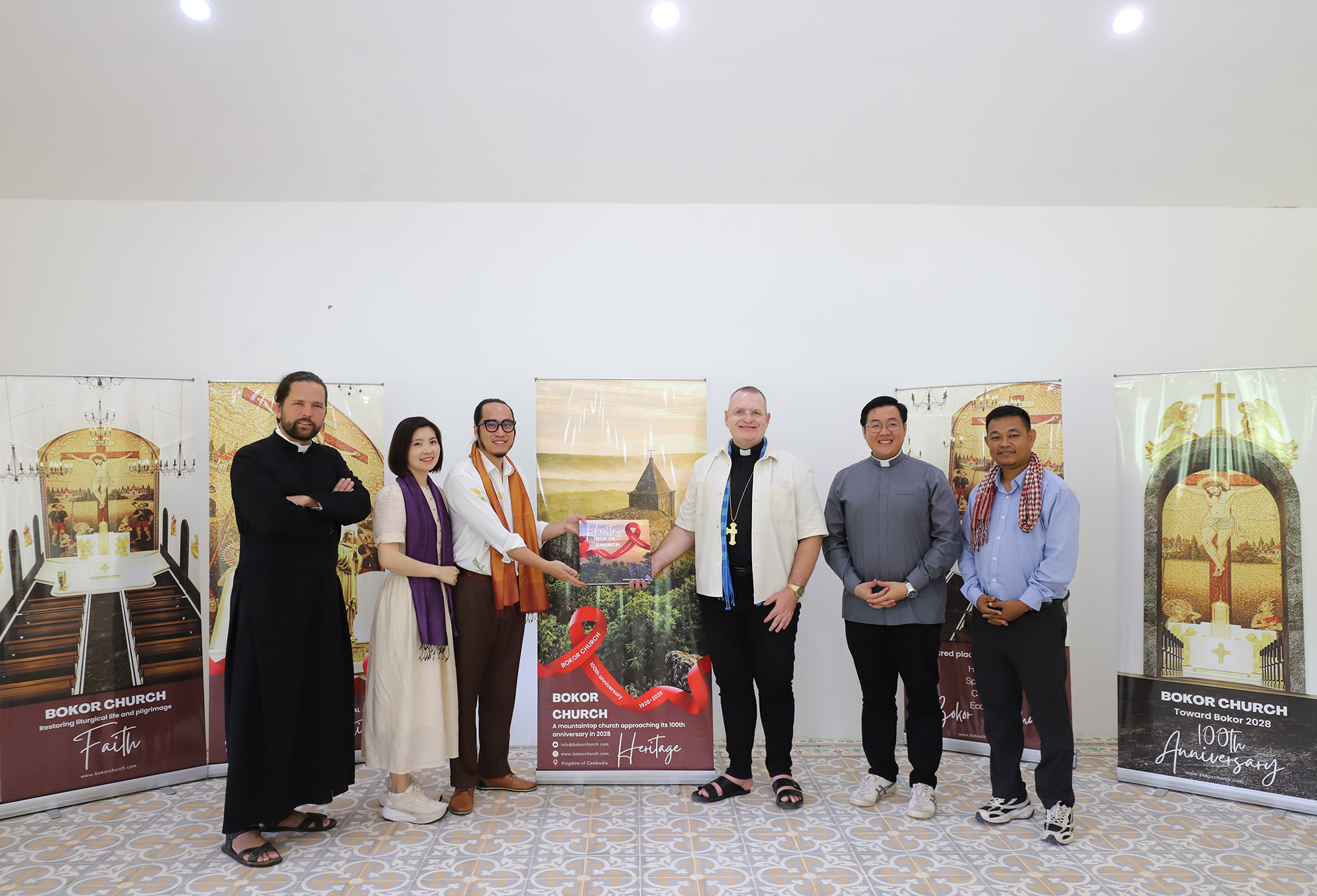
The Second Reunion of the Bokor Steering Committee
On Thursday, June 11, 2026, the Bokor Steering Committee convened its second reunion at the peaceful Eden Voar resort in Kep Province
-21-37-30-03.jpg)
PALM SUNDAY AT BOKOR CHURCH
On the morning of March 29, atop Bokor Mountain bathed in sunlight and wind, the Palm Sunday Mass
-15-59-24-03.jpg)
The Liturgical Future of Bokor
A religious building is only truly complete when it is used according to its original purpose.