The Liturgical Future of Bokor
-15-59-24-03.jpg)
A religious building is only truly complete when it is used according to its original purpose.
For Bokor Church, this does not lie in the restoration of architectural form alone, but in the re-establishment of liturgical life—the essential element that defines the identity of a church.
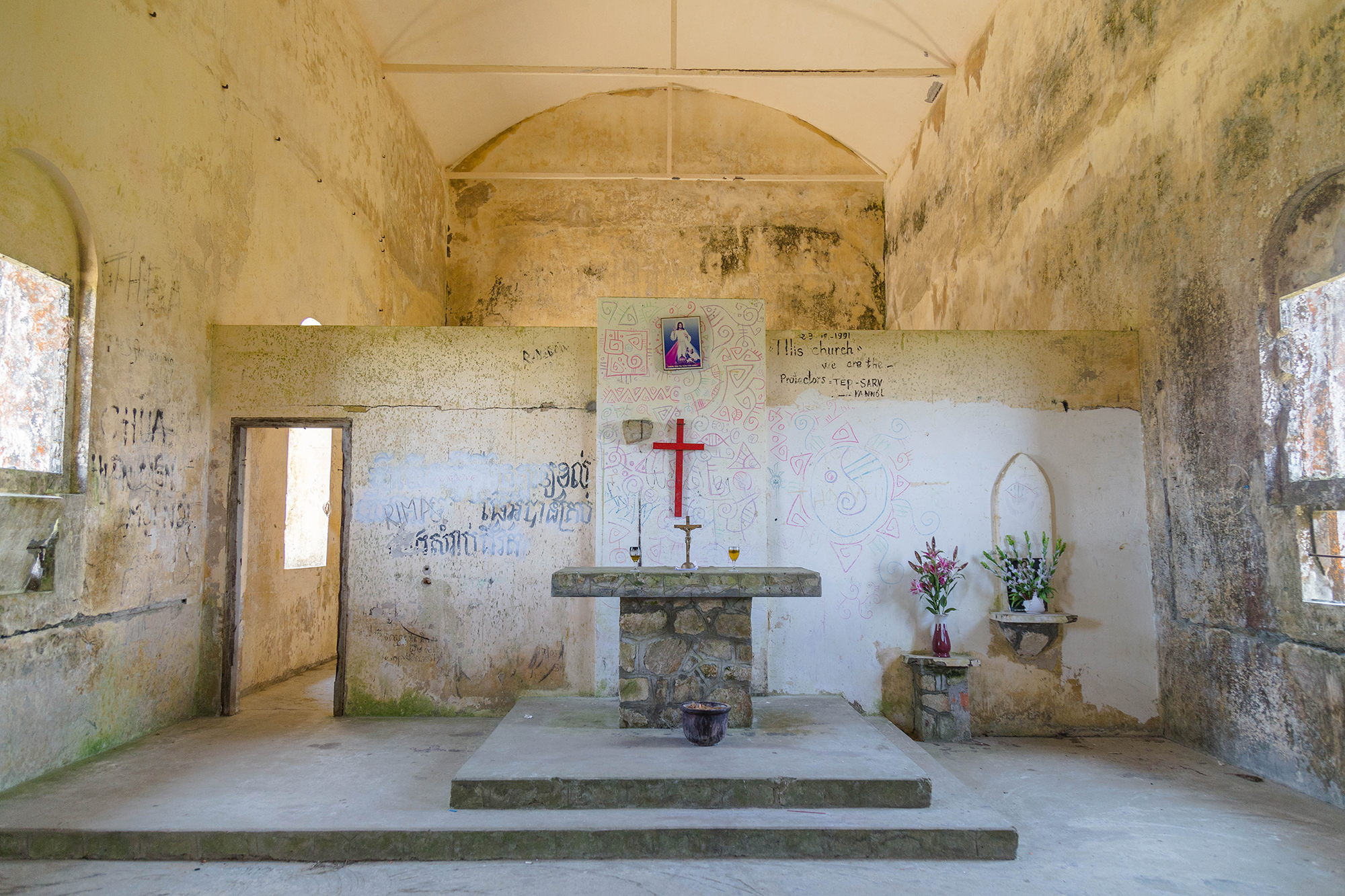
After restoration, Bokor Church is envisioned not as a tourist destination, but as a genuine sacred space, where religious life can unfold in harmony with the unique context of the mountain plateau.
First and foremost is prayer.
The space of the church will remain open, allowing those who come to pause in silence. No fixed program is required, no prescribed ritual—simply a place where one can be present before God, within the stillness of the mountains.
Alongside this is pilgrimage.
Bokor Church holds the potential to become an important destination in the journey of faith—not only for Catholics in Cambodia, but also for believers across the region and the world. Pilgrimages, organized seasonally or on special occasions, will help shape a rhythm of spiritual life that is appropriate to the character of the site.
Another key element is the celebration of the Eucharist.
Masses at Bokor Church need not be frequent, but will be held at meaningful moments: major liturgical feasts, pilgrimage gatherings, or special occasions within the Church. Precisely because they are not frequent, each celebration gains greater solemnity and depth.
The site also opens the possibility for the celebration of marriage.
In a setting removed from the city—surrounded by nature and silence—the sacrament of marriage at Bokor Church carries a particular significance. It becomes not only a ritual, but a deeply spiritual experience, where two people begin their life together in a place that speaks of commitment, unity, and reflection.
In addition, the church can host retreats and spiritual gatherings.
Together with its surrounding support spaces, it may become a place for short retreats, allowing participants to step away from daily life, to reflect, and to renew their inner life.
What unites all these activities is restraint.
They are not oriented toward large numbers.
They do not seek constant use.
Instead, they preserve a rhythm that corresponds to the nature of the place: quiet, contemplative, and profound.
This also requires an appropriate mode of organization.
The coordination of liturgical activities must be carried out with care—ensuring that the church is used according to its purpose, while also protecting both the structure and the surrounding natural environment.
In the future, Bokor Church will not function as a conventional religious center.
It will be a distinct place where liturgy is not defined by frequency, but by depth.
A place where each prayer, each hymn, each moment of silence can be experienced more fully, precisely because of the setting in which the church stands.
And in this way, Bokor Church will not only be restored.
It will continue to live as a sacred space where faith is celebrated, experienced, and nurtured over time.
Bài viết khác
The Second Reunion of the Bokor Steering Committee
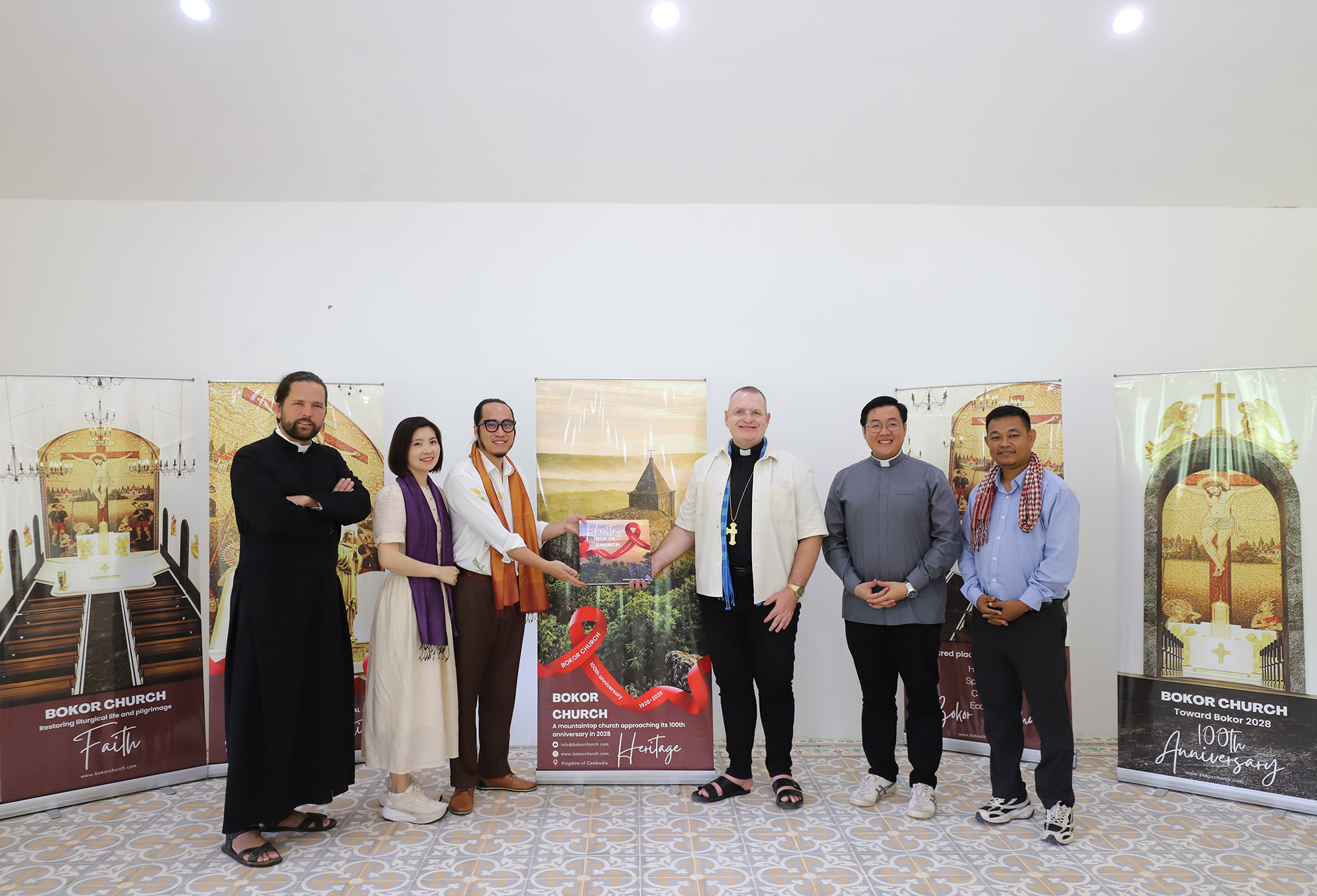
On Thursday, June 11, 2026, the Bokor Steering Committee convened its second reunion at the peaceful Eden Voar resort in Kep Province
-21-37-30-03.jpg)
PALM SUNDAY AT BOKOR CHURCH
On the morning of March 29, atop Bokor Mountain bathed in sunlight and wind, the Palm Sunday Mass