Toward the Mist of Bokor Mountain
-15-39-24-03.JPG)
The morning of January 16, 2026 began in a quiet atmosphere at Eden Resort.
At 6:00 AM, the team gathered to celebrate a Mass of thanksgiving—a beginning not marked by formality, but by a spiritual foundation for the journey ahead. The Mass was offered in gratitude and as a prayer for the new mission of the Bokor Church restoration project.
In a simple setting, surrounded by the calm nature of Kampot, prayers and hymns rose gently, laying the groundwork for a journey that was not only professional, but deeply interior. Before setting out for the survey, each person was invited to pause—to become aware of the meaning of what they were about to undertake.
.jpg)
After the Mass, the group began the ascent to the Bokor plateau.
The road gradually transformed the landscape: from the lowlands by the river, through winding paths, into dense forest, where the air became cooler, more humid, and more subdued. As the elevation increased, mist began to appear, covering sections of the road—obscuring visibility, yet opening a different kind of awareness: a slowing down, a sharpening of attention, a deeper sensitivity to each surrounding movement.
This journey was not merely an approach to a physical site.
It was a shift in perception.
From discussions held in meeting rooms, everything was now placed within a concrete context: terrain, climate, vegetation, and the real conditions in which the structure exists. These were no longer data on paper, but direct experience—something essential for any serious process of conservation.
.jpg)
As the group moved deeper into the plateau, the sense of separation became more pronounced. The familiar sounds of the city faded, replaced by the presence of forest, wind, and a landscape almost untouched by intervention.
It is within this context that Bokor Church stands.
Approaching the site, therefore, was not simply about reaching a destination, but about entering a specific environment—one in which every natural factor directly shapes how the structure was built, how it endures, and how it deteriorates.
The ascent that morning marked the team’s first steps in the field survey—a journey not intended to produce immediate answers, but to observe, to document, and to understand the real conditions of the monument.
At that moment, no conclusions were made. There was only presence.
And that presence was the most necessary beginning.
Amid the dense mist of the Bokor plateau, the path ahead was not entirely clear. Yet each step continued—measured, attentive, and directed toward a specific place: Bokor Church, where the first encounter with the structure was about to unfold.
Bài viết khác
The Second Reunion of the Bokor Steering Committee
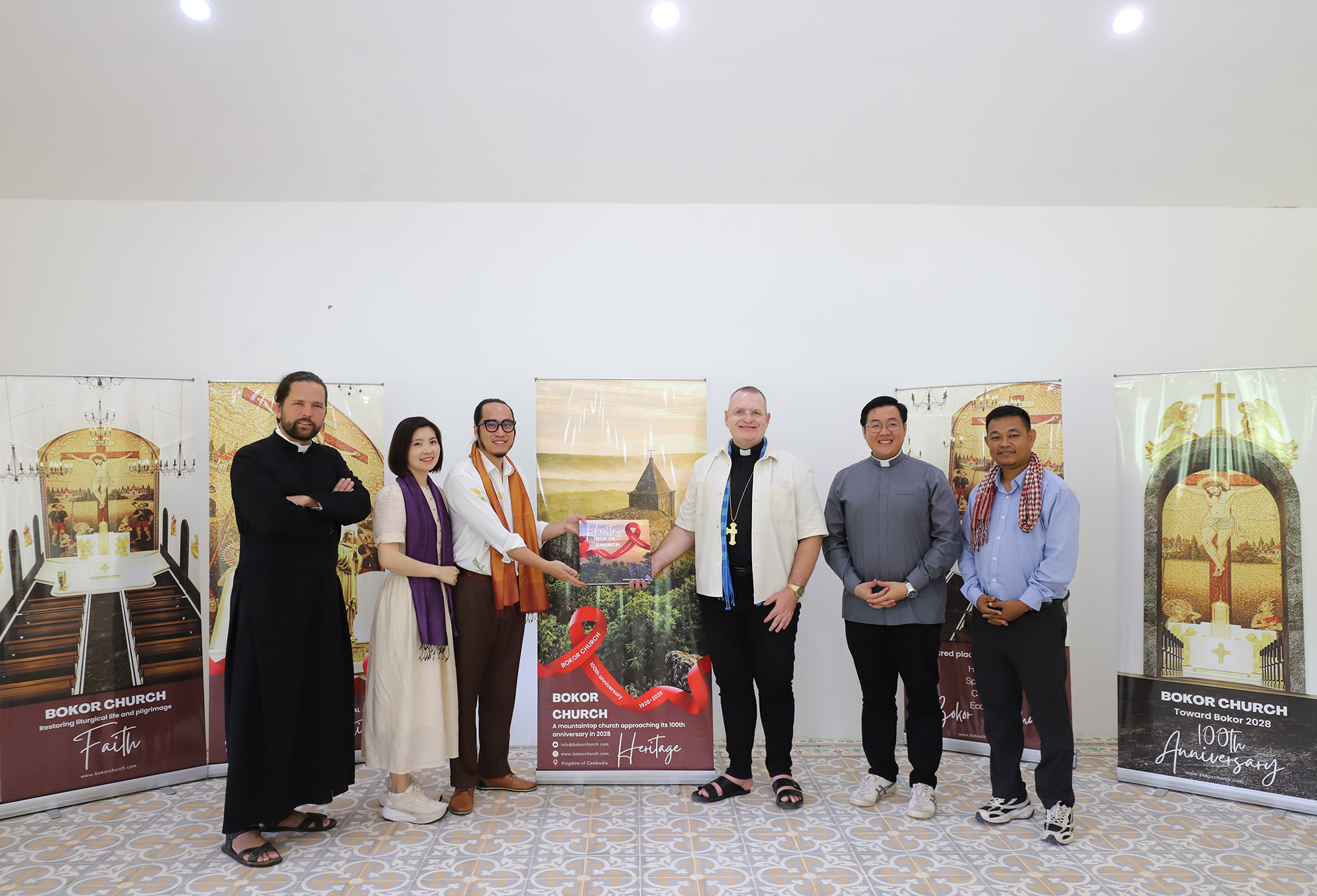
On Thursday, June 11, 2026, the Bokor Steering Committee convened its second reunion at the peaceful Eden Voar resort in Kep Province
-21-37-30-03.jpg)
PALM SUNDAY AT BOKOR CHURCH
On the morning of March 29, atop Bokor Mountain bathed in sunlight and wind, the Palm Sunday Mass
-15-59-24-03.jpg)
The Liturgical Future of Bokor
A religious building is only truly complete when it is used according to its original purpose.