Walking Into the Mist – Anton Tung
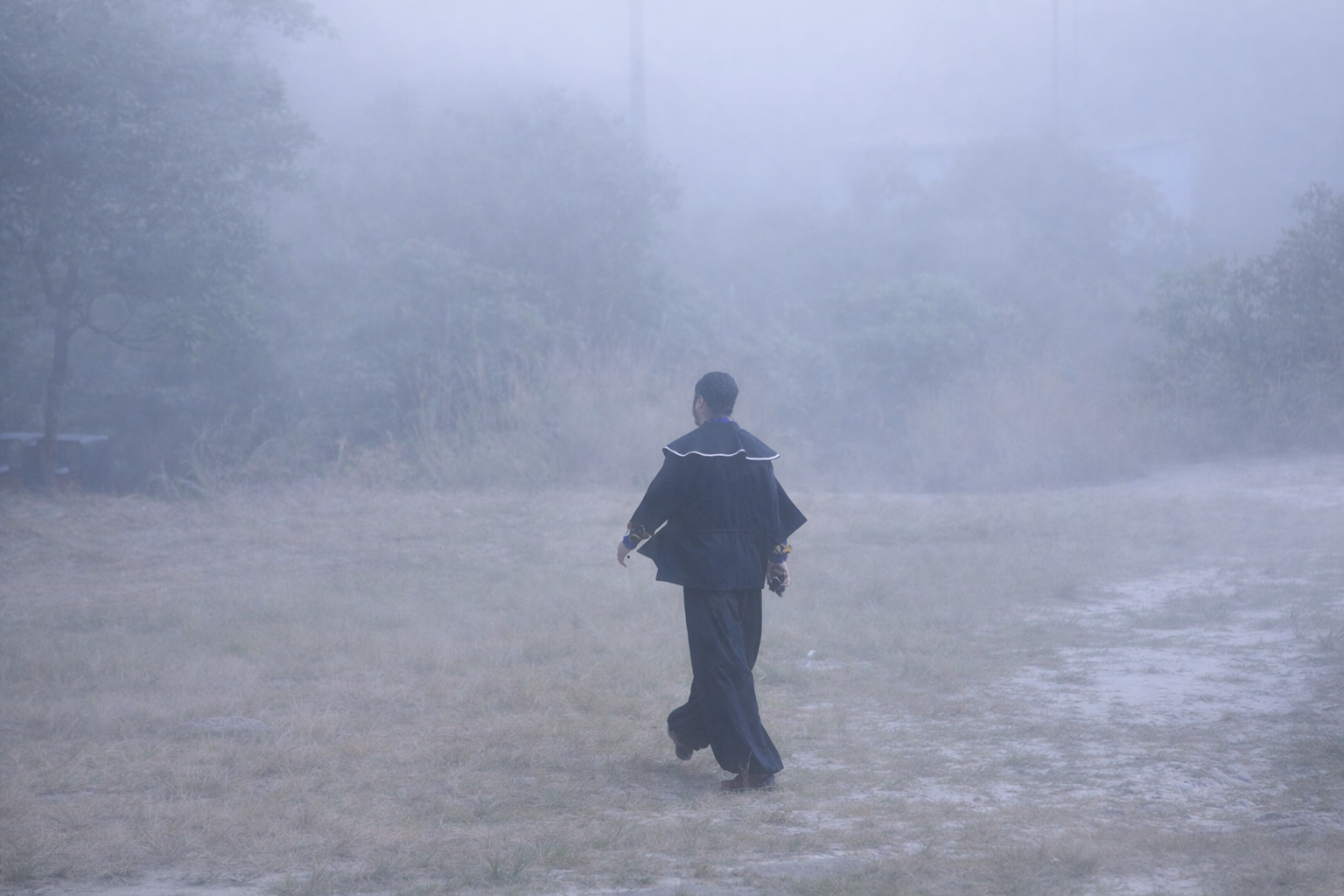
I did not come to Bokor Church with a sense of certainty.
From the very beginning, when the invitation to join the restoration project was first extended, what arose within me was not a clear vision of the work ahead, but a kind of emptiness—just enough to make me aware that I was stepping into a journey I did not yet fully understand.
The image of Bokor Church at that time was much like the landscape itself: veiled in mist, without clear boundaries, without a firm point of reference. I knew of the structure, I knew its history, yet I had not touched the essence it carried.
And it was precisely this lack of clarity that became the reason to continue.
There are works that one can approach with experience, with knowledge accumulated over time. But there are also works that require one to begin again—not as someone who knows, but as someone learning to understand.
Bokor Church belongs to the latter.
In accepting the invitation to join the project, I was fully aware that this was not merely a professional undertaking. It was a step beyond my own familiar ground—geographically, culturally, and even in the way I approach architecture. Cambodia, at that time, remained a distant place to me, filled with more questions than answers.
Yet within that unfamiliarity, I sensed a very particular call.
It was not confidence, but a quiet peace—enough to allow me to step forward. As if something was guiding the way, not through clear signs, but through an interior movement that is difficult to articulate.
As the journey unfolded, I began to realize that I was not simply approaching an architectural structure, but entering into a far more complex reality—one that holds history, faith, wounds, and even things that have never been spoken.
This demanded a different attitude.
Not to approach in order to intervene immediately, but to learn how to pause. Not to rush toward solutions, but to understand what it is that stands before me.
I began to see Bokor Church not merely as a structure in need of restoration, but as a place that needs to be listened to.
And this journey—this journey into the mist—was not about finding a clear path at once, but about learning how to walk even when the path has not yet revealed itself.
In architecture, one often grows accustomed to control: controlling space, materials, outcomes. But at Bokor, I came to understand that there are things that cannot be controlled in that way.
They can only be received.
And from that act of receiving, the journey with Bokor Church gradually began to unfold—not as a problem to be solved, but as a reality to be understood, step by step, with patience and humility.
The mist on the Bokor plateau is no longer an obstacle.
It becomes part of the journey—a space where nothing is immediately revealed, yet enough is given to guide those who are willing to slow down and listen.
Even today, Bokor remains often covered in mist.
Yet within that very mist, I believe the Holy Spirit is quietly guiding the way—so that each step in this journey is not only a professional step, but also a step of faith, of responsibility, and of trust
Bài viết khác
The Second Reunion of the Bokor Steering Committee
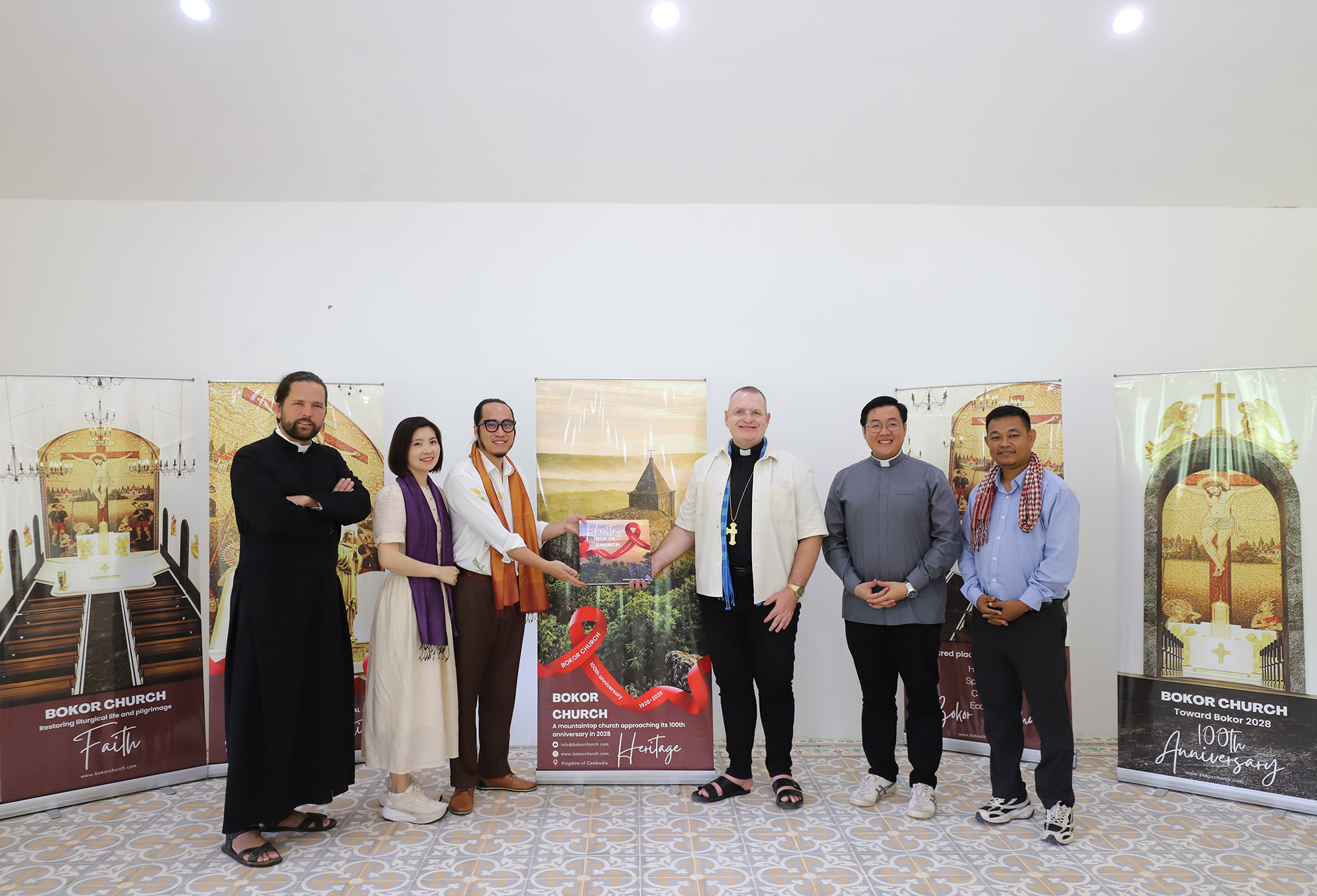
On Thursday, June 11, 2026, the Bokor Steering Committee convened its second reunion at the peaceful Eden Voar resort in Kep Province
-21-37-30-03.jpg)
PALM SUNDAY AT BOKOR CHURCH
On the morning of March 29, atop Bokor Mountain bathed in sunlight and wind, the Palm Sunday Mass
-15-59-24-03.jpg)
The Liturgical Future of Bokor
A religious building is only truly complete when it is used according to its original purpose.